
Traveling with a disability is not just about booking a flight. It is about investigating every bathroom door width, every elevator dimension, and every hotel’s definition of “accessible.” If you have ever arrived at a so-called accessible room only to find a step-in bathtub and a door too narrow for your chair, you already know the problem.
Hotel websites are unreliable. “Accessible” can mean wildly different things depending on the property, the country, and even who answers the phone. That is why real-world travel bloggers (people who actually roll, walk, or navigate these routes with disabilities) are the most valuable resource you can find.
We have curated the ultimate list of 15+ disability travel blogs and platforms that offer honest reviews, detailed accessibility breakdowns, and genuine community support. Whether you use a wheelchair, travel with a service dog, manage chronic illness, or plan trips for a family member with a disability, there is a blog on this list for you.
In This Article
Why You Need Real-World Advice (Not Just Hotel Websites)
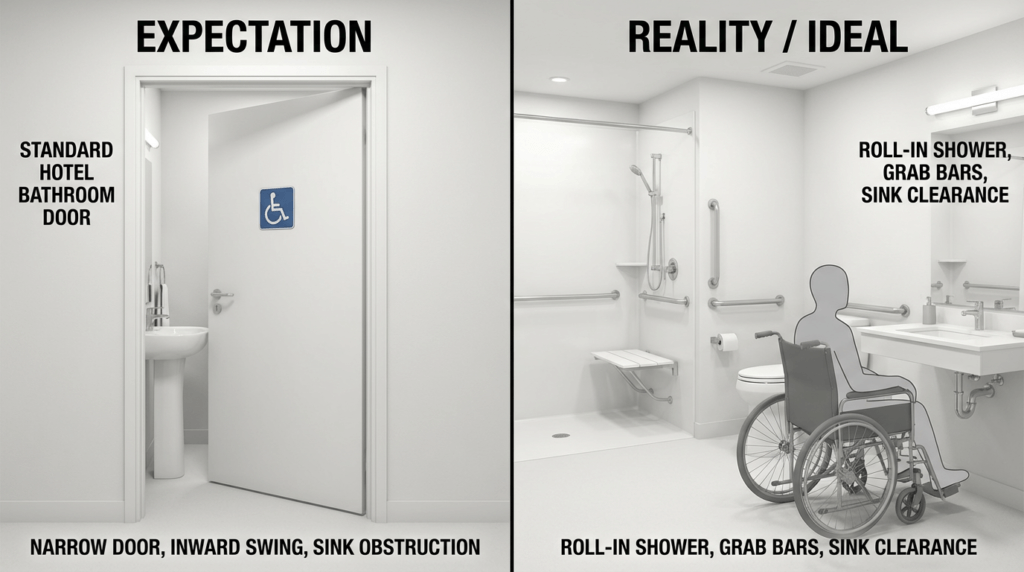
Here’s the deal: ADA compliance on paper and actual accessibility on the ground are two very different things.
A hotel might technically meet minimum standards. But that does not tell you whether the roll-in shower has a lip you cannot get over. Whether the “accessible” restaurant has a single narrow entrance through a side alley, or whether the bed is 28 inches high (ideal for most lateral transfers) or 34 inches high (a serious problem for many wheelchair users).
The bloggers on this list do what hotel marketing departments never will. They measure doorways. They photograph bathrooms from wheelchair height. They test transit systems and report back with specific details you can actually use when planning your trip.
Think of it this way: you would not buy a wheelchair based on a manufacturer’s brochure alone, and you should not book a vacation that way either.
The Titans of Accessible Travel (Must-Follow Blogs)
These five bloggers have built the most comprehensive, well-established resources in accessible travel. If you follow no one else, start here.
1. Curb Free With Cory Lee

- Website: curbfreewithcorylee.com
- Follow: Instagram | Facebook
- Best for: International destination guides, power wheelchair travel
Cory Lee has visited all seven continents from his power wheelchair. That alone tells you something about his determination, but what makes his blog truly valuable is the level of detail in every destination guide. He covers specific hotels (with bathroom photos), accessible tours, airline experiences, and honest assessments of what worked and what did not.
If you are planning international travel as a wheelchair user, Curb Free is the first place to check.
2. Wheelchair Travel (John Morris)
- Website: wheelchairtravel.org
- Follow: Instagram | Facebook | X (Twitter)
- Best for: Air travel logistics, public transportation, city-by-city guides
John Morris runs what many consider the world’s largest accessible travel resource. His library covers hundreds of cities, airports, and transit systems with data-driven reviews. If you want to know whether the Paris Metro is wheelchair-accessible (short answer: it is extremely difficult, but some lines are better than others), John has the breakdown.
His air travel content is especially useful. He covers everything from airline damage claims to boarding procedures to the specific dimensions of onboard aisle chairs.
3. Simply Emma

- Website: simplyemma.co.uk
- Follow: Instagram | Facebook
- Best for: UK and European travel, live music and event accessibility
Emma is a UK-based blogger who covers accessible travel across the UK and Europe. What sets her apart is her focus on experiences most travel blogs skip, like concerts, festivals, and live events. She reviews viewing platforms, accessible entry points, and how venues actually handle disabled guests (compared to what they promise online).
If you are planning a trip to London, Edinburgh, or a European music festival, her guides are detailed and practical.
4. Free Wheelin’ (Karin Willison)
- Website: freewheelintravel.org
- Follow: Facebook
- Best for: US road trips, traveling with a service dog
Karin Willison often takes road trips across the US with her service dog, and her blog reflects the practical realities of that experience. She covers accessible van logistics, service animal policies at hotels and attractions, and the small details that make or break a road trip (such as rest stop accessibility and campground layouts).
If you are planning a domestic road trip and have a service animal, Free Wheelin’ is one of the few blogs that addresses both needs at once.
5. Spin the Globe (Sylvia Longmire)
- Website: spintheglobe.net
- Follow: Instagram | Facebook
- Best for: Solo female travel, cruise accessibility, photography
Sylvia Longmire is a former Air Force officer who now travels the world solo in a power wheelchair. She is one of the few voices covering solo female travel with a disability, and her cruise accessibility reviews are among the most thorough you will find anywhere.
She also takes stunning travel photography, making her Instagram feed both inspirational and practically useful (she often includes accessibility notes in her captions).
Best for Niche Travel Needs
The bloggers below focus on specific audiences and travel styles. Depending on your situation, one of these might be more relevant to you than the “titans” above.
Family Travel: Wonders Within Reach
- Website: wonderswithinreach.com
- Follow: Instagram | Facebook
Jennifer Allen founded Wonders Within Reach to prove that family adventures are possible when your child uses a wheelchair. Her guides to US National Parks are especially valuable, covering specific trail surfaces, accessible restrooms, picnic areas, and ranger programs that accommodate disabled visitors.
If you have been told “that park probably is not accessible” and felt defeated, start with her Yellowstone or Grand Canyon guides. You might be pleasantly surprised.

Family Travel: Have Wheelchair Will Travel (Julie Jones)
- Website: havewheelchairwilltravel.net
- Follow: Instagram | Facebook
Julie Jones writes about traveling with her son, who uses a wheelchair. Based in Australia, her reviews cover everything from theme parks and beaches to long-haul flights and hotel accessibility. She is also the editor of Travel Without Limits magazine, which makes her a well-connected resource in the accessible travel space.
Her reviews are detailed and honest. If she says a hotel room worked for her family, she explains exactly why (bed height, bathroom layout, proximity to elevators).
Blind/Low Vision: Blind Girl Adventures (Sassy Wyatt)
- Website: thinkingoutloud-sassystyle.com
- Follow: Instagram | Facebook
Most accessible travel blogs focus on wheelchair access. Sassy Wyatt fills a critical gap by covering tourism for people who are blind or have low vision. She writes honestly about how destinations handle non-visual accessibility (audio guides, tactile exhibits, staff training) and builds confidence for blind travelers who want to explore independently.
Budget and Lifestyle: Wheels No Heels (Gem Hubbard)
Gem Hubbard’s YouTube channel is a mix of travel vlogs, lifestyle content, and creative solutions to everyday accessibility problems. Her tone is relatable and down-to-earth, and she often covers budget-friendly travel options that the more polished blogs skip.
If you want to follow someone who feels like a friend rather than a professional travel writer, Gem is your pick.
Adventure: Little Miss Turtle (Melanie)
- Website: littlemissturtle.com
- Follow: Instagram
Melanie blogs about European destinations as a full-time power wheelchair user. Her strength is the fine detail: cobblestone severity, curb cut reliability, and the actual (not advertised) accessibility of historic city centers. If you are planning a European trip and worried about old towns and uneven terrain, her guides provide the honest assessment you need.
Deaf/Hard of Hearing: Rexy Edventures (Ed Rex)
- Website: rexyedventures.com
- Follow: Instagram | X (Twitter)
Ed Rex, known as “The Deaf Traveller,” covers luxury and adventure travel from a deaf perspective. His blog addresses a frequently overlooked aspect of accessible travel: how destinations, tours, and transportation handle hearing-related needs. He also reviews communication tools and apps that make travel easier for deaf and hard-of-hearing travelers.
Chronic Illness and Invisible Disabilities: Sick Girl Travels (Maddie)
- Website: sickgirltravels.com
- Follow: Instagram | Facebook
Maddie writes about traveling with chronic pain and invisible disabilities, a topic that most accessible travel blogs do not address. Her content is honest and often humorous, and she covers practical concerns such as managing medications across time zones, finding medical facilities abroad, and pacing yourself on trips when your energy is unpredictable.
Top Accessible Travel Platforms and Communities
Beyond individual blogs, these platforms offer searchable databases, booking tools, and community-driven reviews that can supplement the personal insights of the bloggers above.
Wheel the World
- Website: wheeltheworld.com
- Follow: Instagram
Wheel the World is a booking platform that verifies accessible experiences. What makes them different from standard booking sites is their accessibility mapping: they document specific measurements like bed height, door width, and bathroom layout for every listed property. If you want to book with confidence instead of hope, start here.
WheelchairTraveling.com
- Website: wheelchairtraveling.com
- Follow: Facebook
This community-driven platform hosts a large database of user-submitted accessibility reviews. The reviews vary in depth, but the volume is impressive, and you can often find information about smaller destinations and attractions that the major bloggers have not covered yet.
Limitless Travel
- Website: limitlesstravel.org
- Follow: Instagram
Limitless Travel is an accessible tour operator and blog. If the idea of planning every accessibility detail yourself feels overwhelming, their organized group trips might be a good option. They handle the accessibility logistics so you can focus on enjoying the trip.
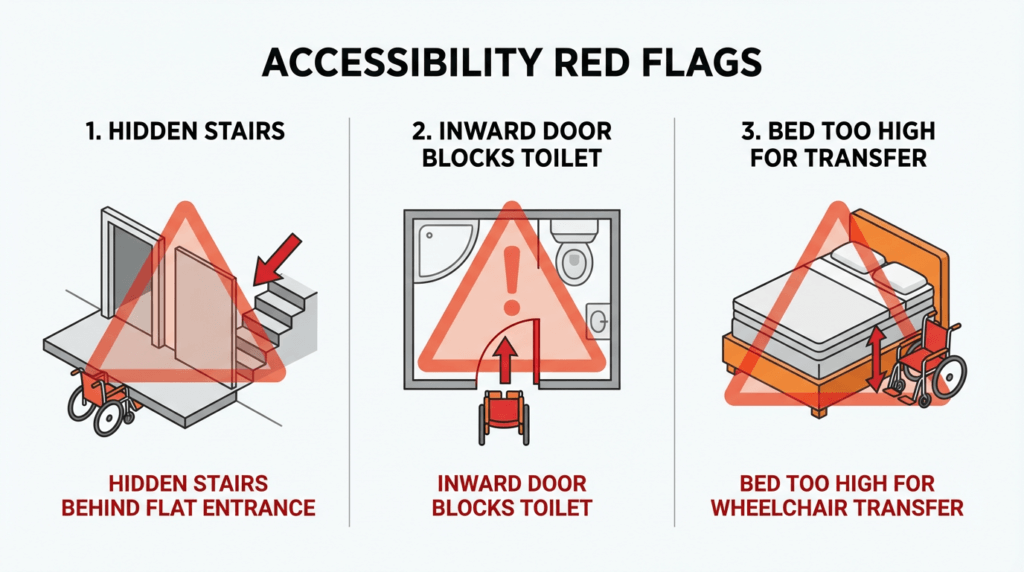
3 Red Flags When Booking “Accessible” Travel
Before you book your next trip, watch for these warning signs. They come directly from the experiences of the bloggers on this list.
1. “Partial” Accessibility
When a hotel says “elevator access” but does not mention the two steps between the lobby and the elevator, that is a red flag. If the accessibility description uses vague language like “mostly accessible” or “accessible with assistance,” dig deeper. Ask specifically: “Can a guest in a power wheelchair get from the entrance to the room and into the bathroom without encountering a single step?”
2. Vague or Missing Bathroom Photos
If the listing shows the bedroom, the view, the pool, and the lobby, but not the bathroom, that is almost always because the bathroom is not truly accessible. Always ask for photos of the bathroom. If they will not send them, do not book it.
3. No Bed Height Information
Bed height matters for anyone who transfers from a wheelchair. The ideal range for most lateral transfers is between 19 and 23 inches (roughly the same height as a standard wheelchair seat). Many boutique and luxury hotels use beds that are 28 to 32 inches high, which makes independent transfer difficult or impossible. Always ask.
Frequently Asked Questions
How do I find truly accessible hotels?
The short answer: do not rely on the booking website alone. Call the hotel directly and ask specific questions about door widths (at least 32 inches for most wheelchairs), bathroom layouts (roll-in shower vs. step-in tub), and bed heights. Request photos of the room and bathroom. Better yet, check whether any of the bloggers on this list have reviewed the property.
Wheel the World also verifies specific accessibility measurements for their listed properties, which removes much of the guesswork.
Does travel insurance cover pre-existing conditions?
Many standard travel insurance policies exclude pre-existing conditions, but some specialty policies include or offer add-on coverage for them. Read the fine print before you buy, and consider consulting a broker who specializes in accessible travel insurance. The bloggers on this list occasionally review insurance providers, so check their archives for recommendations.
Can I take my power wheelchair on a plane?
Yes, you can, and airlines are legally required to transport it. That said, wheelchair damage during flights is a well-documented problem. Cory Lee and John Morris both have extensive guides on protecting your chair during air travel. Key tips include:
- Remove any detachable parts and carry them in the cabin
- Tape detailed handling instructions (with photos) to the wheelchair
- Consider a protective cover or custom crate for long-haul flights
- Document the chair’s condition with photos before and after the flight
- Know your rights under the Air Carrier Access Act (US) or EC 1107/2006 (EU)
—
The world is opening up for travelers with disabilities, but “opening up” does not mean “fully accessible.” Verified, real-world information is still the most important tool you have when planning a trip.
The bloggers and platforms on this list represent years of accumulated knowledge, tested routes, reviewed hotels, and honest assessments. Follow them. Join their communities. Ask questions. And start planning your adventure with confidence, not just hope.
Related on Mobility Deck: