A patient lift is a device that helps caregivers at nursing homes, private residences, and hospitals safely move patients or residents with limited mobility. Whether the goal is transferring between chairs and beds or assisting someone from sitting to standing, patient lifts prevent injuries to both patients and caregivers by providing smooth, controlled transitions.
If you’re shopping for a patient lift for home or facility use, this guide will walk you through the essential features, types, and questions to ask before you buy.
In This Article
Important Questions to Ask Before Purchasing a Patient Lift
Answering these questions upfront will position you to choose the right lift for your situation:
Manual or Electric Patient Lift?
Manual lifts rely on operator power via a hydraulic pump. They’re less expensive (often $500–$1,500) because they require fewer parts, no batteries, and no electronic controls. The tradeoff: they demand more physical effort from the caregiver.
Electric lifts use a rechargeable battery and motor. They cost more ($1,500–$3,000+ depending on capacity and features) but reduce caregiver strain and allow one-handed operation while the other hand steadies the patient.
Where each works best:
- Manual lifts suit home settings with strong, available caregivers.
- Electric lifts are standard in hospitals and facilities, and increasingly chosen for single-caregiver homes.
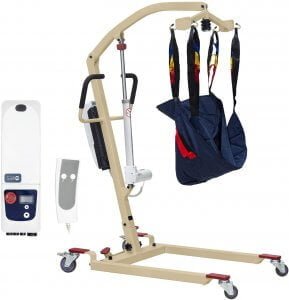
How High Do You Need to Lift the Patient?
Modern hospital beds adjust to accommodate low-to-ground lifts, so this matters less in facility settings. In home settings, confirm your lift’s maximum height matches your bed or furniture height. Check your target bed’s height before purchasing.

What Size Is the Lift?
Patient lifts range from compact (for tight bathrooms) to full-frame (for open bedrooms). Take precise measurements:
- Room dimensions (length, width, height)
- Doorway widths (the lift must fold or fit through)
- Path between bed, bathroom, and living areas
A lift that doesn’t fit your space becomes a $2,000+ paperweight. Compare your measurements to the lift’s specifications before buying.
How Much Weight Can the Lift Support?
Every lift has a maximum weight capacity (typically 300–1,000 lbs). Choose one that supports:
- The patient’s current weight, plus
- Potential weight gain during recovery (patients often regain lost weight as they heal)
Standard capacities:
| Capacity | Best For | Notes |
|---|---|---|
| 300–350 lbs | Average adults | Most home settings |
| 400–500 lbs | Bariatric patients | Heavy-duty base required |
| 600–1,000 lbs | Severely obese patients | Specialized models; higher cost |
Undersizing the capacity risks equipment failure and caregiver injury.
How Much Portability Do You Need?
Portable lifts fold for storage or transport. The catch: even foldable models weigh 70–100 lbs and are challenging for one person to move. Some models disassemble into smaller pieces for easier handling.
If you need to move the lift between rooms frequently (e.g., between home and a day facility), check the weight and confirm you have help.
What About the Patient’s Stability?
The sling (or cradle) you choose directly impacts how safely the patient is positioned. Slings come in 2-, 4-, and 6-point configurations:
- 2-point: Head and seat support (basic, lightweight patients)
- 4-point: Head, seat, and leg support (most common)
- 6-point: Full body support with additional stability points (bariatric or high-acuity patients)
The sling must match both the patient’s weight and their mobility level. A mismatch can cause discomfort, poor positioning, or falls.
Choosing the Right Sling
The sling is as critical as the lift itself. Here are the three main types:
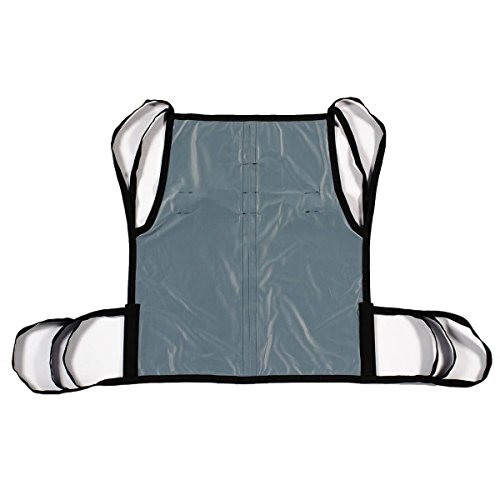
1. Full-body Sling
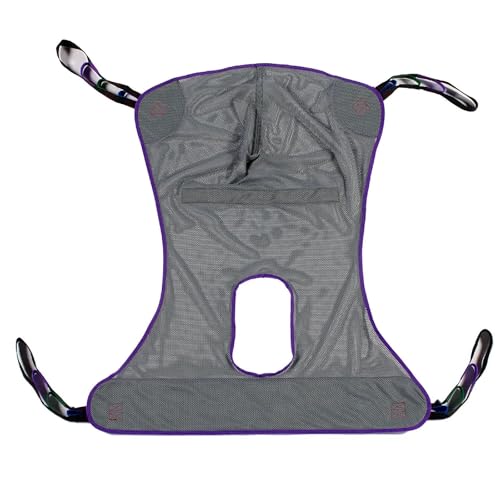
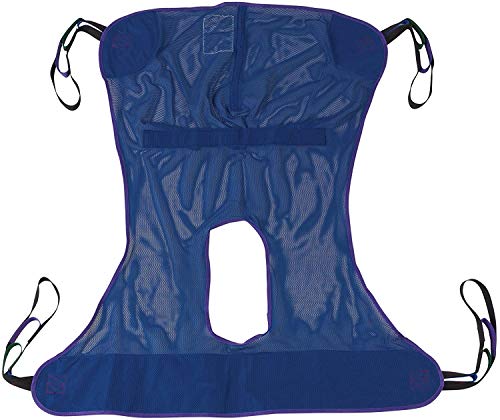
Also called a “hammock” sling, this cradles the entire body with arms inside the straps. Best for: Patients who are partially or wholly dependent and cannot bear any weight.
Key specs to check:
- Weight capacity (typically 250–500 lbs)
- Material (polyester, mesh, or padded options)
- Padded vs. non-padded (padded adds comfort for longer transfers)


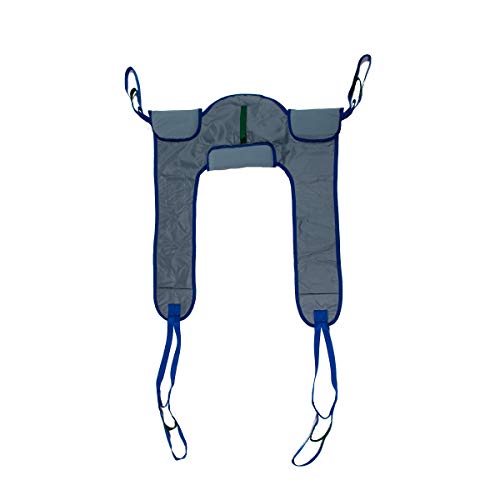
2. U-Sling
U-shaped with wide straps that loop around the legs and thighs. Best for: General-purpose transfers; can be applied or removed while the patient is seated.
Key advantage: Easier setup than full-body slings; allows some patient independence.

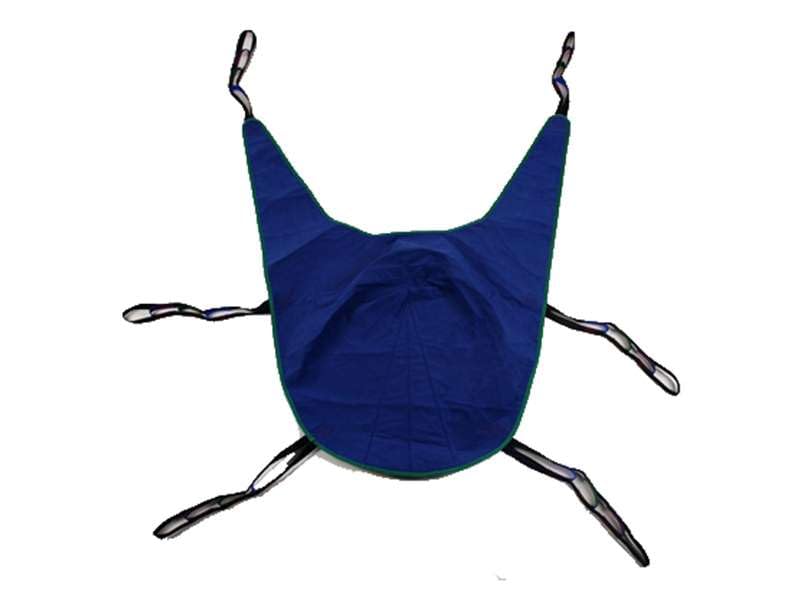
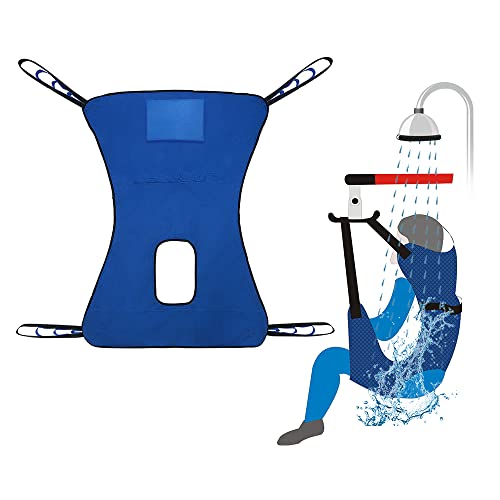
3. Toileted Sling
Full-body design with a bottom opening for toilet access. Best for: Patients who need bathroom transfers without removing the sling.

Emergency Control?
When picking an electric patient lift, it is vital to ensure that it comes with emergency control or manual override. This allows you to safely lift and move the patient even when there is no power. This is ideally vital for both floor lifts and ceiling mounted ones.
Types of Specialty Patient Lifts
Beyond manual vs. electric, lifts are designed for specific situations:
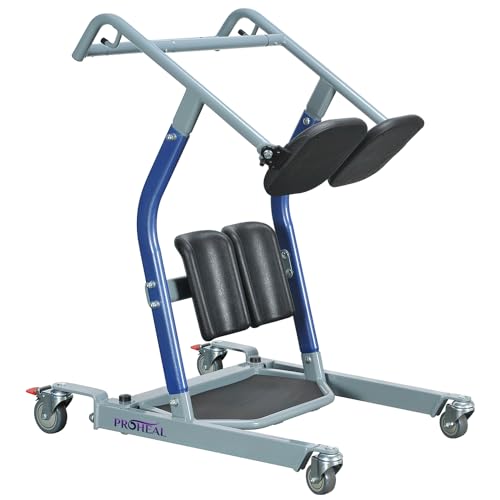
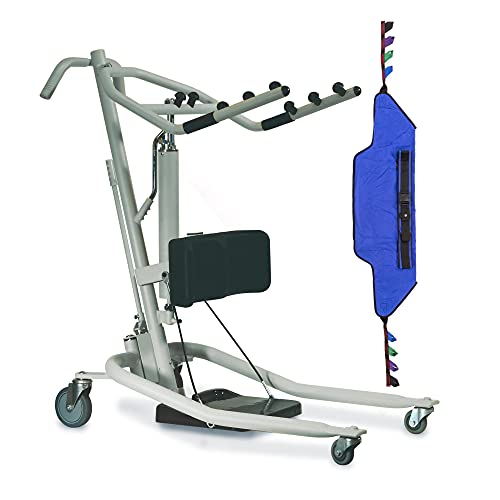
Sit-to-Stand Lifts
Designed to help a patient stand from a seated position. Best for: Patients who can support most of their body weight and control their upper body and head.
Key specs:
- Weight capacity: 300–500 lbs
- Foot plate height (adjust to patient’s leg length)
- Handle style (T-bar, wraparound, or overhead grab)

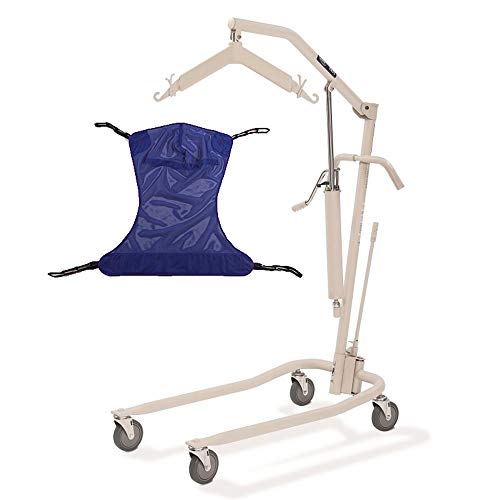
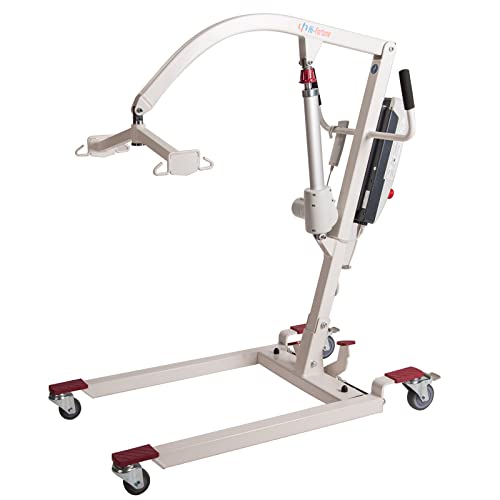
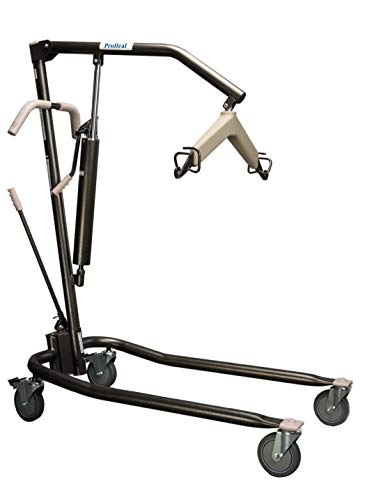
Heavy Duty Lifts
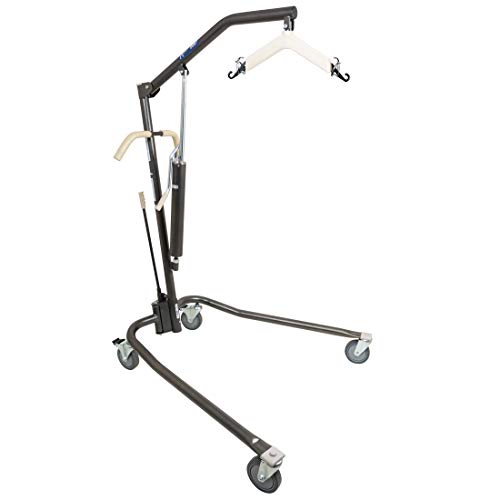
Specialized for high-capacity transfers, supporting 500–1,000 lbs. They feature wide, adjustable legs for stability and narrow folding for passage through doorways.
Best for: Bariatric patients; long-term facility use.
Bath Lifts
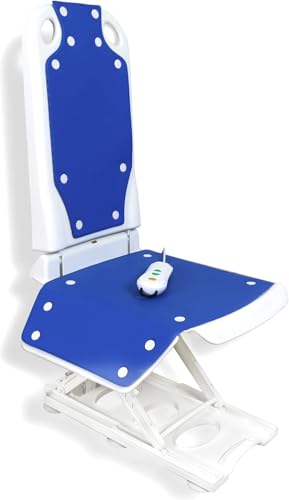
Made from rust-free aluminum and germ-resistant plastic, these lower and raise patients into and out of bathtubs. Some include reclining features for comfort and safety.


Pool Lifts
Unlike their counterpart, these lifts are made to lower or raise people in and out of water. They are often used in hot tubs or pools. Some can be deck mounted, while others are portable, which is always a plus.
No products found.
Patient Lifts: Key Terms & Components
When shopping, you’ll encounter technical terms. Here’s what matters:
1. The Base
The lift’s foundation, typically with a spreader bar that opens and closes. Opening the base lets it fit under wheelchairs and through doorways. Closing it narrows the footprint.
What to check: Can the base open/close smoothly? Does the width range match your space needs?
2. Casters (Wheels)
Single casters rotate 360°; ideal for tile or hardwood.
Dual casters provide better traction on carpet.
Most modern lifts allow you to select caster type. Choose based on your flooring.
3. Boom
The curved hydraulic arm at the top of the lift. This is where the sling attaches and the heavy lifting happens. A longer boom gives more reach; a shorter boom is more compact.
4. Mast
The vertical pole that connects the base to the boom. It slides in and out of the base and telescopes up and down to adjust height.
Emergency Control & Safety Features
If you’re buying an electric lift, confirm it includes:
- Manual override (a hand pump or crank to lower the patient if power fails)
- Emergency descent control (allows safe lowering without battery power)
This is essential for both floor and ceiling-mounted lifts – losing power shouldn’t trap a patient.
Do Your Homework: Regulation & Standards
The patient lift industry is heavily regulated. Any manufacturer must comply with strict quality standards:
- All lifts undergo testing for durability and weight capacity per government standards.
- Test results are kept on file; every lift has a unique serial number.
- Check that the product you’re buying is certified (look for UL, ASTM, or ISO marks on the packaging).
When buying used or refurbished lifts, ask for documentation of the last inspection date and any repairs.
Final Considerations
Patient lifts are a substantial investment—typically $500 (manual) to $3,000+ (electric, heavy-duty). Before you buy:
- Measure your space (doorways, rooms, furniture heights).
- Know your patient’s weight and mobility level (current and expected range).
- Choose manual or electric based on caregiver strength and facility setting.
- Pick the right sling to match the patient’s dependency level.
- Confirm safety features (manual override for electric models; stable base).
- Consult your healthcare team. A nurse, physical therapist, or occupational therapist can recommend the best lift for your specific situation.
Patient lifts give caregivers the support they need to move patients safely while minimizing injury risk. With the right choice, you’re investing in dignity, safety, and comfort for both caregiver and patient.
Related Articles