

Finding the right wheelchair is hard enough. Finding an affordable one feels nearly impossible.
The truth: used wheelchairs typically cost 40–60% less than new models, and many are in excellent condition. But “used” also means no guaranteed warranty and the risk of buying a lemon.
The safest bet? Start with certified refurbishers or local medical supply shops. Then, use this inspection checklist to avoid hidden damage. Private sellers (Facebook Marketplace, Craigslist) offer the lowest prices, but only if you know what to look for.
This guide walks you through the 6 best places to buy, a complete pre-purchase inspection checklist, realistic pricing by type, and red flags that mean “walk away.”
In This Article
Why Consider Buying a Used Wheelchair?
The Financial Reality
Let’s start with numbers, because cost is often the deciding factor.
A new manual lightweight wheelchair, the kind most people think of, costs between $1,200 and $2,500. A new power chair runs $4,000 to $15,000+. And if you need tilt-in-space seating for pressure relief, you’re looking at a minimum of $3,500 to $8,000.
A used version of the same chair? Expect to pay 40–65% less, depending on condition and age. That’s the difference between choosing between rent or a wheelchair and actually owning your mobility.
Here’s the breakdown:
| Chair Type | New Price | Used (Average) | Savings |
|---|---|---|---|
| Manual Lightweight | $1,200–$2,500 | $400–$1,200 | 50–65% |
| Manual Heavy-Duty | $2,000–$4,500 | $700–$2,000 | 55–70% |
| Power/Electric | $4,000–$15,000+ | $1,500–$6,000 | 60–75% |
| Tilt-in-Space | $3,500–$8,000 | $1,200–$3,500 | 60–70% |
Those aren’t theoretical savings. A person who needs a power chair but can’t afford $8,000 suddenly becomes mobile for $2,500. A family stretched thin by medical bills can get a solid backup chair for $300 instead of $1,200. That math changes lives.
When Used Makes Sense
You’re testing before committing.
Maybe you had a recent injury or surgery, and mobility is temporary. Maybe you’ve used a borrowed chair, but this is your first purchase. Maybe you’re unsure whether you need manual or power, lightweight or heavy-duty. A used chair lets you figure out what actually works for you without betting $2,000 on a guess. If it’s not right, you can resell it, often for nearly what you paid.
Your insurance won’t cover it.
Insurance denials happen. Sometimes the approval letter just doesn’t come. Sometimes your coverage caps out at a power chair when you need a specialized one. Out-of-pocket? A used chair is the difference between “I can’t afford this” and “I can make this work.”
You need a backup or secondary chair.
Maybe you have a power chair for distance, but need a lightweight manual for home or cars. Maybe you want an all-terrain chair for outdoor use. A used second chair costs less than the upgrade on your primary one—and spreads the wear across two pieces of equipment instead of destroying one.
You know exactly what model works for you.
Some people have been in a wheelchair for years. They know their fit (16.5-inch seat width, specific backrest height). They know the models that worked before (maybe a chair discontinued three years ago). A used market means you can find that exact model, tested, proven to work.
When NEW Is Worth the Cost
You’re a first-time wheelchair buyer.
If you’ve never used a chair before, buying used adds risk. You don’t yet know if the fit is right. You don’t know whether the frame is truly straight or appears straight. You don’t know if those “minor” cosmetic issues will bother you in six months. A new chair, even at full price, gives you a warranty, a return window, and expert fitting help. For first-timers, that safety net is worth the money.
You need custom sizing or seating.
Maybe you’re significantly heavier than the typical weight range. Maybe you have severe kyphosis (curved spine) and need a very specific backrest angle. You may have pressure injuries and need a specific cushion thickness. Custom wheelchairs are built for one person. Buying someone else’s custom chair, even if you’re a similar size, risks a poor fit and safety issues. Work with a professional for custom fitting, then budget for new equipment.
You use your chair heavily every single day.
If your wheelchair is your legs, you’re propelling it 8+ hours a day on rough terrain, bearing your full weight for years. A new chair with warranty coverage is an investment that pays for itself. Used chairs with unknown service history are wildcards for intensive daily use. A frame weld might hold for five years of moderate use but fail under constant, hard propulsion.
You have complex medical needs around pressure relief.
If you’re at high risk for pressure injuries, a used chair with an unknown cushion history and potentially compromised foam padding is genuinely risky. Your skin is irreplaceable. A new chair with proper pressure-relief seating, a documented cushion, and professional fitting is the right call.
You need your chair to last and be reliable.
If you depend on your wheelchair to get to dialysis three times a week, to your job, or to essential appointments, downtime is dangerous. A new chair with warranty coverage and reliable service options removes uncertainty. A used chair with potential hidden damage is a gamble you might not be able to afford.
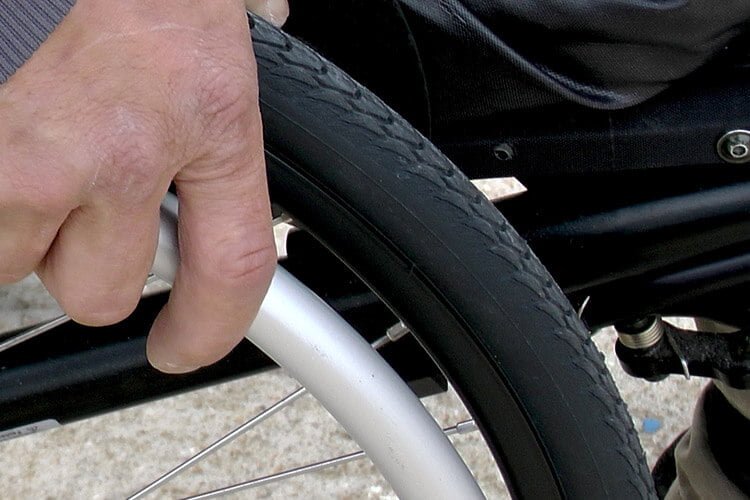
6 Best Places to Buy Used Wheelchairs [Ranked]
The place you buy from matters enormously. Some sellers will have inspected the chair and stand behind it. Others are selling “as-is” with zero liability. Some platforms have buyer protection; others have none.
Here’s the ranked list, from safest to riskiest.
#1 CERTIFIED REFURBISHERS (SAFEST)
Examples: Numotion, RehabMart, local certified DME (durable medical equipment) refurbishers
Why it’s #1: Professional inspection + documented service history + actual warranty. A certified refurbisher isn’t just reselling someone’s old chair. They’re taking it apart, inspecting every component, replacing worn parts (tires, cushions, brake cables), testing it, and documenting everything. You’re buying confidence, not just a used item.
Price Range: $600–$2,500 (mid-range; not the cheapest, but not retail either)
Pros:
- Professional inspection and testing
- 30–90 day warranty (parts and labor)
- Often includes new or refurbished cushion
- Clear documentation of repairs made
- Tech support if something breaks
- Can ask questions about the chair’s history
Cons:
- Smaller inventory than private sellers
- May require appointment to view
- Slower delivery (5–14 days typical)
- Price reflects the labor/inspection (higher than private sale)
Red Flags:
- “As-is” disclaimer without damage documentation
- No written warranty; verbal promises only
- Pressure to buy without inspection
- Can’t test the chair in-person
Next Action: Search “[your city] wheelchair refurbisher certified” or call your local hospital’s equipment room for referrals. Ask directly: “What specific inspections did you do? Do you have a written warranty?”
#2 MEDICAL SUPPLY & DME SHOPS (SAFER)
What to look for: Local or regional chains (Lincare, Apria, patient-forward independents), often with physical locations
Why it ranks high: Staff actually know wheelchairs. They see the same models repeatedly. They’ll notice if something’s off—a wobbling wheel, a frame issue, worn upholstery. DME shops also have liability insurance and professional reputation to protect. They’re not going to sell you something obviously broken and then disappear.
Price Range: $500–$2,000
Pros:
- Staff expertise (can answer fit questions)
- In-person testing and inspection
- Local pickup (no shipping damage risk)
- Professional consultation available
- Basic warranty typical (30–60 days)
- Relationship for follow-up questions
Cons:
- Limited used inventory (most stock is new)
- May require medical referral or insurance
- Staff availability (might require appointment)
- Slightly higher prices than private sellers
Red Flags:
- Pressure to upgrade to new
- Vague description (“good condition” with no details)
- No willingness to let you inspect closely
- Staff can’t answer technical questions
Next Action: Call your insurance provider’s approved DME network. Search your area for non-profit medical supply shops (often lower prices than chains). Ask: “Do you have used wheelchairs in stock? Can I see them and test one?”
#3 FACEBOOK MARKETPLACE & CRAIGSLIST (MODERATE RISK)
What to look for: Detailed photos from multiple angles, seller location/history (longtime resident vs. new account), realistic pricing, transparent answers to questions
Why it ranks here: Huge inventory. Real people selling real chairs they no longer use. Prices negotiable. Fast local pickup. If you know what to look for and you follow the inspection checklist below, you can find incredible deals.
But it’s also where scams live, where damage gets hidden in photo angles, and where “I’m too busy to show you in person” means they don’t want you to see the cracks.
Price Range: $200–$1,500 (huge range; lowest prices often signal damage)
Pros:
- Largest inventory
- Lowest prices (private sale, no overhead)
- Fast local transactions
- Negotiable price (offer 70–80% of asking, see what sticks)
- Flexibility (you set pickup time)
Cons:
- ZERO warranty
- ZERO buyer protection (it’s as-is)
- Scams possible (fake listings, no-shows, payment theft)
- Must inspect in-person before payment
- Can’t inspect shipping damage (remote purchase)
- No recourse if chair breaks next week
Red Flags:
- Vague photos (angles hiding damage, poor lighting)
- “No time to show in-person; mail it to you”
- Price too low for condition described
- Pressure to buy immediately or “someone else is interested”
- Unwilling to answer specific questions (brakes, wheel condition, etc.)
- New account with no seller history
- Payment demands upfront for shipping (classic scam)
Next Action:
- Create a saved search: “[your area] wheelchair manual” or “wheelchair power”
- Set up price alerts
- Message sellers with the inspection checklist (see Section 3); ask for specific photos
- Meet in a public place during daylight
- Bring cash and the checklist; don’t hand over money until you’ve inspected everything
#4 THRIFT STORES & CHARITIES (WILD CARD)
Examples: Goodwill, Salvation Army, local disability nonprofits, community centers, ReStore (Habitat for Humanity)
Why it ranks here: You’ll occasionally find fantastic deals. A solid used chair for $150 instead of $1,200. Plus, your money goes toward a nonprofit mission. But inventory is unpredictable, condition is often truly unknown, and there’s usually no warranty.
Price Range: $50–$600 (lowest prices overall)
Pros:
- Dirt cheap
- Easy returns (if defective, most thrift stores have 14–30 day returns)
- Feel-good purchase (supports nonprofits)
- Sometimes free delivery or help loading
- Staff can’t sell obviously broken items (liability)
Cons:
- Tiny, random inventory
- Condition truly unknown (no inspection before selling)
- No warranty (some thrift stores offer 30-day returns, but check)
- May be outdated models or missing parts
- Hard to find specifically what you need
- Transportation on you if large
Red Flags:
- Rust on frame or components
- Wheels don’t spin freely
- Broken armrests or footrests
- Tears in upholstery (potential mold/damage underneath)
- Musty or foul smell
- Frame visibly bent or dented
- Missing parts with no replacement included
Next Action: Call ahead. Ask: “Do you have any wheelchairs in stock? What condition are they in? What’s your return policy?” Then visit in-person. Inspect thoroughly before leaving. Get a receipt.
#5 ONLINE MARKETPLACES (eBay, Amazon, OfferUp) (MODERATE-TO-HIGH RISK)
What to look for: Seller ratings (4.5+ stars), return policy clearly stated, shipping insurance, detailed product photos, and clear damage disclosure
Why it ranks here: Wider reach (inventory from across the country). Shipping available if you can’t find locally. Some buyer protection (especially eBay/Amazon). But shipping damage is a real risk, you can’t inspect before arrival, and seller variability is huge.
Price Range: $300–$2,000
Pros:
- Larger inventory (nationwide search)
- Shipping to your door
- Buyer protection (eBay Money Back Guarantee, Amazon A-to-Z Guarantee)
- Can research seller reviews
- Can message before purchase
- Photo documentation (for damage claims)
Cons:
- Shipping cost ($150–$400 added)
- Shipping damage risk (carrier may not cover)
- Can’t inspect before paying
- Return shipping costs fall on you if damaged
- Scammers exist (fake listings, bait-and-switch)
- Seller disappears after sale
Red Flags:
- No photos (only stock images)
- Photos from single angle only
- International seller with vague warranty (“no returns”)
- “Final sale” with no inspection window
- Seller has no feedback history
- Price suspiciously low
- Description uses words like “unknown condition” or “may need repairs”
Next Action:
- Check seller ratings (minimum 4.5 stars, 100+ sales)
- Read recent reviews (last 3 months); look for shipping damage complaints
- Message seller before bidding: “Can you confirm chair condition, any repairs needed, and your return window?”
- Buy seller’s shipping insurance
- Video your unboxing and test immediately
- File damage claim within 48 hours if issues found
#6 INSURANCE/DISABILITY GRANT PROGRAMS (FREE/SUBSIDIZED) (LIMITED AVAILABILITY)
Examples: Medicaid waiver programs, disability nonprofits (Easter Seals, local disability coalitions), hospital equipment donation programs, state assistive technology programs
Why it ranks lower: This is the ideal option if you qualify, but availability is limited, eligibility is often strict, and bureaucracy is slow. But if you can access it, it’s free or heavily subsidized.
Price Range: $0–$300 (your cost)
Pros:
- Free or heavily subsidized
- Professionally vetted condition
- Often includes fitting/consultation
- No private negotiation needed
- Tax-deductible donation (if nonprofit)
Cons:
- Long wait lists (months to years)
- Strict eligibility (income limits, medical necessity proof)
- Limited selection (chair chosen for you, not by you)
- Complex paperwork and approvals
- May require your state’s residency
Red Flags:
- “No longer available” after months of waiting
- Staff can’t answer your questions
- Program disappears (funding cuts; nonprofits can close)
Next Action:
- Contact your state Medicaid office: “Do you have a used wheelchair assistance program?”
- Search your city for disability nonprofits + “wheelchair assistance”
- Call your local hospital’s equipment donation program
- Ask social workers at rehab centers about programs
- Contact your state’s Assistive Technology Program (ATP)
QUICK COMPARISON TABLE
| Source | Price Range | Safety | Warranty | Best For |
|---|---|---|---|---|
| Certified Refurbisher | $600–$2,500 | Highest | 30–90 days | First-timers; peace of mind |
| DME Medical Shop | $500–$2,000 | High | 30–60 days | Local testing; expert advice |
| Facebook/Craigslist | $200–$1,500 | Medium | None | Budget buyers; local pickup |
| Thrift Stores | $50–$600 | Medium | 14–30 days (store-dependent) | Bargain hunting; testing |
| eBay/Amazon | $300–$2,000 | Medium | Varies; buyer protection exists | Nationwide shopping; shipping |
| Nonprofits/Grants | $0–$300 | High | Program-dependent | Eligible low-income buyers |
What to Check Before You Buy: Complete Inspection Checklist
Here’s the truth: a $50 inspection by a wheelchair technician can save you $500+ in repair costs. A 30-minute inspection using this checklist can save you $1,000+ by avoiding mistakes.
Whether you’re standing in someone’s garage, on a video call, or unboxing a chair that just arrived, use this checklist. Print it. Take photos. Ask specific questions. Don’t skip this.
FRAME & STRUCTURE (5-minute check)
This is where catastrophic failures happen. Frame cracks don’t announce themselves until the chair suddenly collapses.
☐ No visible cracks, bends, welds, or rust (especially on seat tube, casters, axles)
- What to look for: Run your fingers along all welds. Hairline cracks aren’t small problems—they’re structural failures waiting to happen. Rust = corrosion = compromised strength.
- How to check: Look where the seat tube (main frame pipe) connects to the wheels. Look at the backrest attachment points. Look at the crossbrace under the seat. Any orange/brown discoloration = rust.
- Red flag: Shiny silver paint suddenly turns orange → corrosion hidden under paint.
☐ Folds smoothly (manual chairs); no creaking or grinding
- What to test: Open and close the fold 5–6 times. It should be smooth, quiet, and click into a locked position when folded.
- Red flag: Grinding noise (broken welds), creaking (loose connections), won’t lock into fold (bent frame).
☐ Seat height is consistent (no drooping on one side)
- What to test: Place the chair on a flat surface. Sit in it. Does one side feel lower? Is your weight distributed evenly?
- Red flag: One side sags = bent frame or compromised crossbrace. This affects stability and long-term durability.
☐ Frame is square (roll it straight; doesn’t pull to one side)
- What to test: On a smooth, flat surface, push the chair straight ahead. Does it pull left or right? Does it roll straight?
- Red flag: Pulls to one side = bent axles or misaligned frame. This causes uneven tire wear and is a pain to live with.
☐ Welds are intact (run your fingers along joints; no rough spots or cracks)
- What to feel: Smooth metal. No cracks, breaks, or rough spots.
- Red flag: Any crack in a weld = potential failure point.
WHEELS & TIRES (7-minute check)
Wheels are the difference between mobility and being stuck. Bad wheels = you don’t go anywhere safely.
☐ Tires have tread (not bald; not flat-spotted)
- What to look for: Run your hand over the tire. Feel ridges (tread). Bald tires = slippery on wet surfaces = safety risk.
- How to check: Look at the tire wear. Is it even all around? Or worn on one side? (Uneven wear = alignment issue; expect $75–$200 to fix).
- Red flag: Bald tires, flat-spotted tires (dented), dry rot (visible cracks in the rubber).
☐ Wheels spin freely (hand-propel manual; check for resistance)
- What to test: Spin each wheel by hand. It should spin smoothly for at least 10–15 full rotations before slowing. Should not require force.
- Red flag: Wheel stops after 2–3 rotations (bearing damage); grinding sound (sand/debris in bearing); wobbles while spinning (bent axle).
☐ Tire pressure is appropriate (use a tire gauge; manual chairs: 40–90 psi typical)
- What to check: Buy a cheap tire gauge ($5). Check the tire sidewall for recommended pressure. Inflate if needed.
- Red flag: Flat tire (check the valve for leaks), bulging sidewalls (structural failure), or repeatedly losing air (tube or valve issue).
☐ Axles are straight (spin wheel; wobble = bent axle)
- What to test: Spin a wheel and watch the axle. Does it stay centered? Or does it wobble side-to-side?
- Red flag: Wobble = bent axle. This is fixable ($80–$150 per wheel) but an expense to budget for.
☐ No bulges or hernia (sidewall damage)
- What to look for: Bulges on the tire sidewall (the curved part between the tread and the wheel rim). Bulges = internal structural failure = imminent blowout.
- Red flag: Any bulge = tire needs replacement ($30–$80 per tire).
☐ Caster wheels spin smoothly (front wheels; should roll without stuttering)
- What to test: Spin the front caster wheels. They should rotate smoothly, not stutter or jerk.
- Red flag: Stuttering = worn bearing or debris in the wheel; may need replacement ($20–$50).
BRAKES & SAFETY (5-minute check)
Brakes are the only thing keeping you from rolling downhill. Non-functional brakes are a safety emergency.
☐ Brakes engage firmly (wheel should not roll when locked; test on slight slope)
- What to test: Lock both brakes. Try to push the chair forward (gently). It should not move at all.
- Red flag: Chair rolls even slightly = brake failure. Do not buy this chair.
☐ Brake cables are intact (not frayed, not loose)
- What to look for: Follow the brake cable from the handrim (or brake lever) to the brake drum. Look for fraying, kinks, or loose connections.
- Red flag: Frayed cables (about to snap), loose connection (brake won’t engage reliably), kinked cable (sticks and releases unpredictably).
☐ Parking brakes work on both sides (manual chairs)
- What to test: Lock the left brake, try to roll left. Lock the right brake, try to roll right. Both should hold.
- Red flag: One side loose while other is tight (uneven braking) = tipping risk.
☐ Anti-tip wheels attached (if required by user)
- What to look for: Small wheels extending behind the rear wheels, usually removable. They prevent backward tipping.
- Red flag: Missing anti-tips (if needed for safety), or anti-tips that swing freely (should be fixed position or easily locked).
☐ Seat belt or restraint intact (if applicable)
- What to check: Is the belt attached? Does it click/lock securely? Is the fabric torn?
- Red flag: Broken buckle, torn fabric, no anchor points.
SEAT & CUSHION (5-minute check)
The seat is where you spend your whole day. Damage here affects comfort, hygiene, and skin health.
☐ Seat fabric/vinyl has no tears, stains, or odor
- What to look for: Scan the entire seat and backrest. Tears = water damage inside. Stains = bacterial growth or spills. Odor = mold or contamination.
- Red flag: Stains suggest moisture inside frame (can cause rust). Musty smell = mold (health hazard). Urine smell = deep contamination.
☐ Seat does not sag or feel unstable (sit and shift weight)
- What to test: Sit in the chair. Shift your weight side to side. Does it feel solid? Or does it flex/sag?
- Red flag: Sag = compromised frame or upholstery deterioration. You’ll feel unstable and uncomfortable.
☐ Cushion is present and in usable condition
- What to check: Is there a cushion? (Many used chairs are sold without one; budget $100–$400 for replacement if needed.)
- Press the cushion with your hand. Does it rebound? Or does it stay compressed?
- Look for holes, leaks, or discoloration.
- Red flag: Flat, non-rebounding foam (needs replacement). Holes/leaks (if air cushion, it’s failing). Stains (hygiene concern).
☐ Armrests firm and not cracked
- What to test: Push on the armrest. Does it flex? Does it crack when you press?
- Red flag: Loose armrest (adjustment screws loose or missing), cracks (structural failure), sharp edges (injury risk).
☐ Footrest secure and adjustable (if removable, should move smoothly)
- What to test: Push and pull the footrest. Does it come off cleanly? Does it adjust smoothly? Does it lock into place?
- Red flag: Stuck footrest (corrosion or worn pin), can’t adjust height, won’t stay in place.
☐ Backrests not torn or misaligned
- What to look for: Tears in fabric, backrest leaning to one side, backrest loose and wobbly.
- Red flag: Torn fabric (hygiene, discomfort), misaligned backrest (poor posture support), loose connections (safety).
CONTROLS (Power Chairs Only; 5-minute check)
Power chairs add electrical complexity. Non-responsive controls are expensive to fix.
☐ Joystick/controls responsive (test forward, back, left, right, gentle movements)
- What to test: Turn on the chair (if possible). Move the joystick in all directions. Chair should respond smoothly, not jerkily or with delay.
- Red flag: Delay in response (electrical issue), jerky movement (motor or controller problem), unresponsive in one direction (failing component).
☐ No delay or jerky response (sign of electrical issue)
- What to test: Move the joystick slowly. Chair should move smoothly at the same speed.
- Red flag: Jerks and stops, acceleration spikes, or feels “drunk” (unpredictable movement).
☐ Lights/indicators work (battery level, power, error lights)
- What to test: Turn on the chair. Do indicator lights illuminate? Do they show battery level?
- Red flag: No lights (electrical issue), lights flash erratically (error condition), can’t tell battery level (can’t judge run time).
☐ Battery age documented (ask seller; batteries 3+ years old may need replacement)
- What to ask: “How old is the battery? When was it last charged? How long does it hold a charge?”
- Budget note: Battery replacement is $400–$1,200. If you’re buying a 5-year-old power chair with original battery, assume you’ll replace it soon.
☐ Charger included and functional (test if possible; ask for manual)
- What to check: Is the charger included in the sale? Does it have the manual? Can you test it (plug it in, does it show charging indicator)?
- Red flag: No charger (must buy replacement, expensive). Charger is old/damaged. Charger for obsolete model (no longer manufactured).
DOCUMENTATION (5-minute check)
Documentation proves ownership and gives you repair history.
☐ Receipt or proof of purchase
- What to ask: Do you have the original receipt or invoice? This helps with warranty claims and resale later.
☐ Original manual or spec sheet
- What to ask: Do you have the user manual? Maintenance schedule? This is helpful for future repairs.
☐ Service history (maintenance records = well-cared-for chair)
- What to ask: Has the chair been serviced recently? Do you have records of repairs (new tires, brake adjustment, etc.)? This tells you the chair’s history.
☐ Ownership transfer documentation (some areas require this; check local laws)
- What to check: Some states require a bill of sale or transfer document. Ask: “Do we need to fill out any transfer paperwork?”
RED FLAG SUMMARY: DEAL-BREAKERS (Don’t Buy If Any of These Apply)
DO NOT BUY if you see:
- ☐ Rust on frame or major components
- ☐ Cracks in frame (especially weld seams, seat tube)
- ☐ Wheels wobble or don’t spin freely
- ☐ Brakes don’t hold on flat ground (test on a slope)
- ☐ Seat sags noticeably or feels unsafe
- ☐ Musty, moldy, or foul odors
- ☐ Missing parts (footrest, armrest, wheels)
- ☐ Chair size obviously wrong for user (tiny frame for heavy person = safety risk)
- ☐ Seller won’t let you inspect in-person
- ☐ Seller refuses to answer direct questions
- ☐ Price is suspiciously low (often means hidden damage)
PHOTOS TO REQUEST (If Buying Online)
If you can’t inspect in-person, ask the seller for these specific photos:
- Full side view (shows overall condition, frame alignment)
- Full front view (shows seat width, armrest condition)
- Seat close-up (fabric condition, any tears or stains)
- Frame/welds close-up (any visible cracks or rust)
- Wheels/tires close-up (tread depth, any damage)
- Brakes engaged and disengaged (to show they work)
- Video of chair rolling (shows frame alignment, wheel balance)
- Video of brakes locking (shows they hold on slight slope)
Time Investment: 20–30 minutes for in-person inspection; 10 minutes to review photos online.
Cost to Save: $200–$1,000+ in avoided repairs and poor purchases.
Used Wheelchair Pricing Reality: What You’ll Actually Pay
Before you start shopping, you need to know what’s realistic. Understanding pricing helps you spot deals and avoid lemons.
CONDITION TIERS & PRICING
Used wheelchairs fall into condition brackets. The condition determines both the price and what repairs you’ll need to budget for.
| Condition | Description | Typical Price (% of new) | What It Means | Expected Repairs |
|---|---|---|---|---|
| Excellent | Minimal use, well-maintained, clean, all parts functional | 50–60% of new | 1–3 years old; may have minor cosmetic wear | None (ready to use) |
| Good | Regular use, well-maintained, functional, clean | 40–50% of new | 3–7 years old; minor wear expected | Possible soon: tires, brake cables, cushion |
| Fair | Regular use, functional, cosmetic wear visible, may need minor service | 30–40% of new | 7–10 years old; expect some repairs needed | Likely: new tires ($50–$150), brakes ($50–$150), cushion ($100–$400) |
| Poor | Heavy use, cosmetic/functional damage, major repairs needed | 15–30% of new | 10+ years old; salvage/parts potential | Major: frame repair, wheel alignment, upholstery, battery (if power) |
The key insight: cheaper doesn’t always mean better value. A $400 “excellent condition” chair is a better investment than a $200 “fair condition” chair that needs $300 in repairs.
REAL-WORLD PRICE EXAMPLES
Here’s what you’ll actually see when shopping. These reflect typical local market prices and may vary by region.
MANUAL LIGHTWEIGHT WHEELCHAIR (~16–20 lbs)
Folding aluminum frame, good for travel, standard mobility
- New retail price: $1,200–$2,500
- Used (Excellent condition): $600–$1,400
- Used (Good condition): $400–$900
- Used (Fair condition): $250–$500
- Used (Poor condition): $100–$300
Example scenarios:
- “Barely used, 2 years old, cleaned weekly” → expect $1,000–$1,400
- “Regular daily use, 5 years old, still works great” → expect $500–$800
- “Heavy use, 8 years old, needs new tires and cushion” → expect $300–$500
MANUAL HEAVY-DUTY WHEELCHAIR (~25–30 lbs)
Bariatric or ultra-durable frame, higher weight capacity (300–500 lbs), longer lifespan
- New retail price: $2,000–$4,500
- Used (Excellent condition): $1,000–$2,500
- Used (Good condition): $700–$1,500
- Used (Fair condition): $400–$900
- Used (Poor condition): $200–$500
Example scenarios:
- “300 lb capacity, like new, from estate sale” → expect $1,800–$2,500
- “Well-maintained, 6 years old, daily use” → expect $800–$1,300
- “Works but needs new tires and brakes” → expect $400–$700
TILT-IN-SPACE OR COMPLEX SEATING WHEELCHAIR
Advanced positioning for pressure relief, reclining backrest, specialized cushioning
- New retail price: $4,000–$8,000+
- Used (Excellent condition): $2,000–$4,500
- Used (Good condition): $1,200–$3,000
- Used (Fair condition): $700–$1,800
- Used (Poor condition): $400–$1,000
Example scenarios:
- “Pressure relief system, barely used, perfect for spinal cord injury” → expect $3,500–$4,500
- “Tilt mechanism works, minor cosmetic wear, 5 years old” → expect $1,500–$2,500
- “Tilt still works but needs new cushion and seat cover” → expect $800–$1,500
POWER/ELECTRIC WHEELCHAIR
Motorized, battery-powered, requires charging, typically heavier
- New retail price: $4,000–$15,000+ (ranges widely based on features)
- Used (Excellent condition): $2,500–$8,000
- Used (Good condition): $1,500–$5,000
- Used (Fair condition): $800–$2,500
- Used (Poor condition): $400–$1,200
Example scenarios:
- “Power chair, 2 years old, excellent condition, new battery recently replaced” → expect $5,000–$8,000
- “Works well, 4 years old, original battery still holds charge for 8 hours” → expect $2,500–$4,000
- “Functional but battery getting weak, needs replacement soon” → expect $1,200–$2,000
Battery replacement caveat: If buying a power chair with original battery that’s 3+ years old, budget an additional $400–$1,200 for battery replacement within the year.
HIDDEN COSTS: PLAN FOR THESE
The chair’s sticker price is only part of the story. Budget for repairs and replacements that almost always come with used equipment.
REPLACEMENT/REPAIR COSTS YOU’LL LIKELY ENCOUNTER
| Item | Typical Cost | Timeline | Likelihood |
|---|---|---|---|
| Cushion replacement | $100–$400 | Immediately or within 1 year | High (hygiene, foam breakdown) |
| Tire replacement (per wheel) | $30–$80 | Within 6 months | Medium/High (depends on condition) |
| Inner tube replacement (per wheel) | $15–$40 | Within 6 months | Medium (if flat tires occur) |
| Brake cable replacement | $50–$150 | Within 1 year | Medium (cables wear with age) |
| Brake pad/shoe replacement | $30–$100 | Within 1 year | Medium |
| Wheel axle straightening/replacement | $80–$200 per wheel | If wobbling detected | Low/Medium |
| Professional inspection before purchase | $50–$150 | Before you buy | Optional (recommended) |
| Upholstery repair (small tear) | $50–$200 | If needed | Low |
| Pressure relief foam replacement | $100–$400 | Immediately (if worn) | Medium |
| Shipping (if remote purchase) | $150–$400 | One-time | Depends on source |
| Wheel alignment (after shipping damage) | $75–$200 | If shipping damage | Low (if shipped) |
DEPRECIATION & RESALE VALUE
If you’re buying temporarily (testing, short-term need), understanding resale value matters.
Used wheelchair depreciation:
- Year 1: drops 10–15% from your purchase price
- Year 2–3: drops another 10–15%
- Year 5+: plateaus (older chairs hold value if well-maintained)
Example: You buy a used manual chair for $600. Resell it 6 months later for $500–$550. Your “rental” cost = $50–$100 + repairs. Often cheaper than renting.
WHAT TO ACTUALLY BUDGET (THE HONEST ANSWER)
If you’re buying a used wheelchair, here’s a realistic total budget:
| Budget Tier | Chair Cost | Repairs/Accessories | Total | Best For |
|---|---|---|---|---|
| Ultra-budget | $150–$300 | $200–$400 (tires, cushion, brakes) | $350–$700 | Testing; backup chair; high risk |
| Budget-conscious | $300–$600 | $100–$300 (preventive maintenance) | $400–$900 | Secondary chair; DIY-capable buyer |
| Middle ground | $700–$1,200 | $100–$200 (minor repairs expected) | $800–$1,400 | First-timer; want reliability |
| Cautious/safety-first | $1,000–$1,500 | $0–$100 (mostly included) | $1,000–$1,600 | First-timer; medical complexity; peace of mind |
QUICK PRICING REFERENCE TABLE
Use this to quickly estimate fair market value:
| Chair Type | Excellent | Good | Fair | Poor |
|---|---|---|---|---|
| Manual lightweight | $600–$1,400 | $400–$900 | $250–$500 | $100–$300 |
| Manual heavy-duty | $1,000–$2,500 | $700–$1,500 | $400–$900 | $200–$500 |
| Tilt-in-space | $2,000–$4,500 | $1,200–$3,000 | $700–$1,800 | $400–$1,000 |
| Power/electric | $2,500–$8,000 | $1,500–$5,000 | $800–$2,500 | $400–$1,200 |
Pro tip: Use these ranges as a sanity check. If a chair’s price is drastically below or above these ranges, ask why.
Deal-Breakers & Safety Warnings: When to Walk Away
Not every used wheelchair is a deal. Some are safety hazards. Some are scams. Some will cost you more in repairs than a new chair would have.
RED FLAG CHECKLIST: WALK AWAY IF YOU SEE ANY OF THESE
Print this. Check it before you buy.
Structure & Safety:
- ☐ Cracks in frame (especially welds)
- ☐ Rust on load-bearing parts (seat tube, axles)
- ☐ Frame doesn’t fold smoothly or won’t fold
- ☐ Wheels wobble or don’t spin freely
- ☐ Brakes don’t hold on flat ground
- ☐ Brakes engage unevenly (one side vs. other)
- ☐ Seat sags noticeably or feels unsafe
Hygiene & Contamination:
- ☐ Musty, moldy, or urine smell
- ☐ Large stains on seat fabric
- ☐ Visible mold or discoloration
- ☐ Stains near frame attachment points
Power Chair Specific:
- ☐ Battery age unknown or >5 years old with no replacement plan
- ☐ Charger missing or incompatible
- ☐ Joystick response jerky or delayed
- ☐ No manual override
Size & Fit:
- ☐ Chair obviously wrong size for user (tiny frame for heavy person)
Seller Behavior:
- ☐ Won’t let you inspect in-person
- ☐ Refuses to answer specific questions
- ☐ Pressures you to decide quickly
- ☐ Won’t provide photos of specific components
- ☐ Demands payment upfront for shipping
- ☐ Is evasive about the chair’s history
Price & Transparency:
- ☐ Price suspiciously low (often means hidden damage)
- ☐ Seller can’t explain why price is so cheap
- ☐ No documentation of ownership or service
WHAT TO DO IF YOU ENCOUNTER A SCAM
If you suspect fraud:
- Stop communication with the seller
- Don’t send money (if you haven’t already)
- Report the listing to the platform (Facebook, Craigslist, eBay)
- Report to local police (if you’ve lost money)
- Contact your payment provider (if you’ve paid; they may reverse charges)
If you’ve already sent money and been scammed:
- Contact your bank/PayPal immediately (dispute/chargeback)
- File a police report (creates a record; unlikely to recover money, but important for documentation)
- Report to the FTC (reportfraud.ftc.gov)
Common Questions About Buying Used Wheelchairs (FAQS)
Q: Will my insurance cover a used wheelchair?
A: Rarely. Most insurance plans (Medicare, Medicaid, private) require equipment to be “new”—meaning purchased from a manufacturer or authorized dealer, not used from a private seller.
Exceptions exist:
- Some Medicaid programs: Cover used equipment obtained through official grant or donation programs (state-specific)
- VA benefits: May cover used equipment in certain cases (ask your VA rep)
- Workers’ compensation: Sometimes allows used equipment if cost-benefit is clear
- Donations/gifts: Don’t count as “purchased,” so they bypass new-equipment requirements
Tax deductions:
- Some states allow tax deductions for disabled persons’ mobility equipment (check IRS rules)
- Donations to nonprofits may be tax-deductible (ask the nonprofit)
Call your insurance before buying used. Ask: “Do you cover used wheelchairs? Are there grant programs for used equipment?” Get the answer in writing. If the answer is no, you’re buying out-of-pocket which is why used saves so much money.
Q: How do I know if a chair has been in a collision or fall?
A: Ask the seller directly, then inspect for signs.
What to ask:
- “Has this chair ever been in a fall or accident?”
- “Has it been in a collision?”
- “Any major damage in the past?”
Signs of past collision/fall:
- Frame dents, creases, or obvious bends
- Misaligned wheels (one side lower than the other)
- Rust or discoloration (suggests frame was exposed or bent)
- Mismatched paint (sign of repainting or repair work)
- One side of the backrest higher than the other
- Wheel wobbles despite looking okay (bent axle from impact)
Why it matters: Collision damage can be internal (bent welds, micro-fractures) and not obvious at first glance. A frame that was bent and straightened may fail unexpectedly.
What to do: If you suspect collision damage, ask for a professional inspection ($50–$150) before buying.
Q: Can I use a used power chair battery, or should I replace it?
A: Depends on age and charge-hold. Here’s the decision matrix:
| Battery Age | Hold Time | Decision |
|---|---|---|
| 0–2 years | 8+ hours | Use; no replacement needed |
| 2–3 years | 6–8 hours | Consider replacement soon (budget for it) |
| 3+ years | <6 hours | Replace immediately ($400–$1,200) |
| Unknown | Unknown | Test the charge hold; if <4 hours, replace |
How to test the battery:
- Fully charge it (plug in overnight)
- Use the chair for a typical day
- Check how long the charge lasts
- If it lasts less than 4 hours, battery is failing
What to ask the seller:
- “How old is the battery?”
- “Does it hold a full charge for your typical daily use?”
- “When was it last replaced?”
- “Do you have documentation?”
Rule of thumb: If battery is >3 years old, budget for replacement ($400–$1,200) in your total purchase cost. Factor this into your offer.
Q: What if I buy used and it breaks after a month?
A: Your recourse depends on where you bought it.
| Source | What Happens | Recourse |
|---|---|---|
| Private sale (Facebook, Craigslist) | No warranty; chair is “as-is” | None; you’re stuck. Prevention: inspect thoroughly beforehand. |
| Thrift store | May have 14–30 day return | Return it during window; get refund or credit. |
| DME shop | Has 30–60 day warranty | Contact them; they repair or replace at no cost. |
| Certified refurbisher | Has 30–90 day warranty | Contact them; they repair or replace. |
| eBay | eBay Money Back Guarantee | File a return within 30 days; eBay mediates. |
| Amazon | A-to-Z Guarantee | File a return within 30 days; get refund or replacement. |
Certified refurbishers and DME shops are worth the extra cost. Peace of mind for 30–90 days is valuable.
Q: Should I buy a used custom wheelchair?
A: Proceed cautiously. Here’s the issue:
Custom wheelchairs are tailored to one person’s measurements:
- Seat width (matched to hip width)
- Seat depth (matched to thigh length)
- Backrest height and angle (matched to posture needs)
- Seat height (matched to leg length)
- Armrest height (matched to shoulder height)
If you’re a different size:
- Too narrow a seat = discomfort, skin breakdown
- Too deep a seat = leg circulation issues
- Wrong backrest angle = poor posture, pain
- Wrong seat height = feet don’t touch footrest properly
Safe approach:
- Get measured by an occupational therapist or wheelchair tech (free or low-cost at hospitals/rehab centers)
- Compare your measurements to the custom chair’s specifications
- Only buy if measurements match closely (within 1–2 inches on key dimensions)
- Or buy a used standard chair instead (more flexible sizing)
Alternative: Work with a professional for proper custom fitting, then budget for new equipment. It’s more expensive upfront but safer for long-term use.
Q: Is it legal to buy/sell used medical equipment without a license?
A: Yes, in most places. Private sales of used wheelchairs are legal in most U.S. states and countries.
Some states have rules about:
- Selling used medical equipment: Some states require dealer licensing for selling used equipment to others (as a business). Private individuals selling their own chair = usually fine.
- Documentation/liability: Some states require signed acknowledgment that equipment is “as-is” and not medically guaranteed.
- Listing as “medical”: Listing on platforms as “medical equipment” vs. “mobility device” may trigger different rules.
Play it safe:
- When in doubt, ask your local health department or a DME shop: “Are there any state regulations about buying/selling a used wheelchair?”
- Get documentation: Receipt, bill of sale, or simple note saying “sold as-is” (protects both parties)
- Disclose known issues (ethical, and protects you legally)
For most private sales, you’re fine. If you’re buying or selling a large number of chairs as a business, check your state’s regulations.
Q: How do I know if a chair’s size is right for me?
A: Key measurements to check:
| Measurement | How to Take It | “Right” Range | Why It Matters |
|---|---|---|---|
| Seat width | Hip width + 1–2 inches | Usually 14–20 inches | Too narrow = discomfort; too wide = hard to propel |
| Seat depth | Thigh length – 2–4 inches | Usually 15–18 inches | Too deep = leg circulation; too shallow = support gap |
| Seat height (to footrest) | Feet should have slight knee bend | 100–110° knee bend | Wrong height = leg discomfort, circulation issues |
| Backrest height | Mid-scapula (mid-back) | Usually 12–16 inches tall | Too low = poor support; too high = restricted arm movement |
| Armrest height | 1 inch above the seat | Usually 9–10 inches | Wrong height = shoulder strain |
How to measure yourself:
- Seat width: Measure your hip width (side to side while sitting) and add 1–2 inches
- Seat depth: Sit in a chair; measure from your back to 2–4 inches before your knees
- Seat height: Measure the distance from your sitting position to under your knee; should allow 100–110° bend
- Backrest: Measure from your sitting position to mid-back; should support without hitting neck
If unsure: Ask a wheelchair technician or occupational therapist to measure you (often free or $25–$50 at hospitals/rehab centers). They can also confirm the used chair’s sizing.
If wrong size: A chair that’s not sized right = discomfort, pressure injuries, poor mobility, and potential long-term damage. Not worth saving $300 to buy a wrongly-sized chair.
Q: Can I haggle on a used wheelchair? What’s a fair offer?
A: Yes, haggling is expected on used wheelchairs. Here’s how to do it respectfully:
Fair negotiation strategy:
| Starting Price | Fair Offer Range | Reasoning |
|---|---|---|
| $800 | $560–$640 (70–80%) | Standard private sale negotiation |
| $1,200 | $840–$960 (70–80%) | Standard private sale negotiation |
| $500 | $350–$425 (70–85%) | Lower prices have less room to negotiate |
How to negotiate:
DO:
- “I’m interested, but I need the price to be closer to [fair offer] because [specific reason: I’ll take it as-is, I’m paying cash, I can pick up today]”
- Lead with research: “I found similar models at $X; can we meet at $Y?”
- Lead with specifics: “The tires need replacing ($100), and the cushion is worn ($150); can we adjust the price?”
- Bundle requests: “If you include the cushion, I’ll pay your asking price”
- Offer cash for local pickup: “I can pay cash and pick it up today”
DON’T:
- Lowball aggressively (10–20% below market value) without justification → turns off honest sellers
- Highlight cosmetic issues as deal-breakers
- Claim damage that isn’t there to negotiate down
- Change the agreed-upon price after you’ve committed
- Negotiate via guilt or pressure tactics
Example negotiation:
- You: “I’m very interested, but I noticed the tires look worn, and the cushion isn’t included. New tires are about $100, and a cushion is $150–$200. Could we meet at $700?” (Starting ask was $800)
- Seller: “These tires still work fine, but I can go down to $750.”
- You: “I can do $750 if you throw in the cushion. I’m paying cash and picking up today.”
- Seller: “OK, $750 with the cushion.”
- Result: You got the cushion (saves $150–$200 later) at a reasonable price. Seller feels respected.
Q: How quickly should I buy if I find the right chair?
A: It depends on the source.
| Source | Urgency | Why |
|---|---|---|
| Certified refurbisher | Low | Inventory changes slowly; you have time to think |
| DME shop | Low | Usually in stock; won’t disappear overnight |
| Facebook Marketplace | Medium | Someone else might buy it; best to inspect quickly |
| Craigslist | High | Very limited inventory; popular listings sell fast |
| Thrift store | Very high | Only one item; once it’s gone, it’s gone |
| eBay | High | Auction items end quickly; buy-it-now items might get offers |
Best practice:
- Don’t rush if you haven’t inspected in-person
- If you’ve inspected and it’s perfect, buy quickly (especially for low-inventory sources like thrift or Craigslist)
- For remote purchases, take time to ask questions and see photos—don’t rush into an unseen purchase
- Trust your gut; if something feels off, walk away
Q: Can I get insurance for a used wheelchair?
A: Probably not as “medical equipment.” Here’s the reality:
Medical equipment insurance:
- Usually only covers NEW equipment
- Requires proof of purchase from authorized dealer
- Won’t cover used items from private sellers
Homeowner’s/renter’s insurance:
- May cover damage to personal property (including wheelchairs)
- Check your policy; may require itemized list
- Doesn’t cover loss (theft) of mobility equipment specifically
- Deductible usually applies
Disability/mobility-specific insurance:
- Rare; very few providers offer this
- Very expensive if available
- Usually only covers new equipment
Practical approach:
- Treat your used wheelchair like any valuable item
- Keep receipts and documentation
- Store it safely (not on porch; locked area if possible)
- Use a tracking device or photo documentation (for recovery if stolen)
- Replace tires/cushions as needed (preventive maintenance = fewer repairs)
Q: What’s the difference between a refurbished and a used wheelchair?
A: Big difference. Here’s the distinction:
| Aspect | Refurbished | Used |
|---|---|---|
| What it is | Professionally inspected, repaired, cleaned, tested | Sold as-is from private owner; unknown history |
| Inspection | Full mechanical inspection | Varies (none if private sale) |
| Repairs | Parts replaced as needed (tires, brakes, cushions) | Buyer is responsible for repairs |
| Cleaning | Professional cleaning; sanitized | May be clean; may not be |
| Documentation | Full service history provided | May have none |
| Warranty | 30–90 days typical | None (private); varies by source |
| Price | $600–$2,500 typical | $200–$1,500 typical |
| Risk level | Low | High (if private seller) |
“Refurbished” means professionally prepared and warrantied. “Used” means as-is, no guarantees. Refurbished costs more but is safer for first-timers.
Q: Is it worth buying a wheelchair from an estate sale?
A: Maybe. Here’s the logic:
Pros of estate sales:
- Usually clean (estate managers clean items before sale)
- Often include documentation (original owner kept care records)
- Fixed pricing (no negotiation, but usually fair)
- Professional sales staff who can answer questions
- Often tested and vetted
Cons of estate sales:
- No warranty (sold as-is)
- Limited selection (whatever was in that person’s possession)
- Often higher prices (estate sales assume higher-quality items)
- May not fit your needs (sized for someone else)
Good candidates for estate sales:
- ✅ If you have a specific model/size in mind
- ✅ If documentation is important to you
- ✅ If you want higher confidence in condition
- ✅ If you’re not in a hurry
Not good candidates:
- ❌ If you need a specific fit (may be sized for someone else)
- ❌ If you want a warranty or return option
- ❌ If you’re on a tight budget (estate prices are often higher)
Ask the estate sale company about the chair’s history before bidding. Ask to inspect it in person before the sale. If the condition is good and the price is fair, estate sales can be a smart option.
Q: Should I buy a lightweight chair, or is a heavy-duty chair better?
A: Depends on your needs. Here’s the comparison:
| Aspect | Lightweight | Heavy-Duty |
|---|---|---|
| Weight | 16–20 lbs | 25–35 lbs |
| Weight capacity | 250–300 lbs typical | 300–500 lbs typical |
| Durability | Good for moderate daily use | Built for intensive daily use |
| Cost | $400–$1,200 used | $700–$2,000 used |
| Folding | Easier to fold and transport | Heavier; harder to fold |
| Propulsion effort | Easier (less weight to push) | Harder (more weight) |
| Longevity | 5–7 years typical | 10+ years typical |
| Best for | Travel, occasional use, lighter individuals | Daily intensive use, heavier individuals, durability |
Choose lightweight if:
- ✅ You travel frequently
- ✅ You need to fold and transport (cars, planes)
- ✅ You’re self-propelling (less weight = easier to move)
- ✅ You’re lighter (<250 lbs)
- ✅ Occasional or moderate use
Choose heavy-duty if:
- ✅ You’re heavier (>250 lbs)
- ✅ You use it daily, intensively
- ✅ You want maximum durability
- ✅ You don’t need to transport it much
- ✅ Longevity is more important than weight
Q: Where should I store my used wheelchair to prevent rust?
A: Storage location matters for longevity.
Best storage:
- Indoors, dry place (bedroom, closet, garage)
- Temperature-stable (not extreme heat/cold)
- Away from moisture (not basement if damp, not near bathroom steam)
- Upright or on sturdy stand (not leaning on wheels)
Worst storage:
- ❌ Outside (rust from rain, UV damage to tires)
- ❌ Damp basement or garage (promotes rust)
- ❌ Attic (temperature extremes, moisture)
- ❌ Against walls with moisture (basement walls weep)
Maintenance during storage:
- Inflate tires monthly (pressure drops over time)
- Check for dust buildup
- Ensure brakes still engage
- Wipe down frame with a dry cloth monthly
Seasonal care:
- In winter: Keep in heated area (extreme cold hardens tires, damages batteries)
- In summer: Avoid direct sun (UV damages tires and upholstery)
Q: Can I take a used wheelchair on an airplane?
A: Yes. Here’s what you need to know:
TSA/airline rules:
- Wheelchairs are usually free to check (no baggage fee)
- Manual wheelchairs: TSA allows; don’t count as baggage
- Power wheelchairs: TSA allows; check battery type (lithium vs. sealed lead-acid)
- Some airlines require advance notice (call ahead)
How it works:
- Tell the airline when you book that you have a wheelchair
- At check-in, you’ll gate-check the wheelchair (it goes on the plane with you)
- At your destination, wheelchair is retrieved before you exit
- You may be offered a loaner wheelchair for the airport itself
Pro tip:
- Bring documentation of your mobility need (doctor’s note helps)
- Use a hard-sided carrying case if possible (protects from damage)
- Label it clearly with your name and destination
- Take photos of the chair’s condition before and after travel (document damage)
Damage during air travel: Airlines are sometimes rough with wheelchairs. If it arrives damaged:
- Document the damage immediately
- File a claim with the airline within 48 hours
- Get repair estimates
- Follow up until resolved
Q: Do I need a prescription to buy a used wheelchair?
A: No prescription is required. Wheelchairs are sold as mobility devices, not medical prescriptions.
- If insured: Insurance may require a prescription from a doctor to cover newequipment (doesn’t apply to used)
- For fitting/sizing: An occupational therapist or wheelchair tech can help with proper fit (not required, but recommended)
- For medical advice: If you have pressure injury risk or complex seating needs, consult a healthcare provider
Buy as you wish (no prescription required). If unsure about sizing or safety, consult a professional.
Q: What should I do if I’m scammed?
A: Here’s your action plan:
If you haven’t sent money yet:
- Stop communication
- Report the listing to the platform
- Move on
If you’ve sent money (via bank transfer, wire, gift card):
- Contact your bank immediately (within 48 hours)
- Report it as fraud/scam
- Ask if the transaction can be reversed (unlikely for wire transfers, but try)
- File a police report (local law enforcement; creates a record)
- Report to the FTC (reportfraud.ftc.gov)
If you’ve sent money via PayPal/Venmo:
- File a dispute immediately through PayPal/Venmo
- Explain that the item didn’t match the description or wasn’t sent
- Provide evidence (screenshots, photos, messages)
- PayPal/Venmo will mediate; you have a decent chance of reversal
If you’ve sent money via eBay/Amazon:
- File a case/return immediately through the platform
- Explain the situation
- Platform will side with you in most scam cases
- Refund is processed
If you received a damaged or different item:
- Document everything (photos, video, messages)
- File a dispute immediately with the platform/payment method
- Do NOT accept the item as-is if you can refuse it
- Return the item if possible (shipping back is usually covered in platform disputes)
Prevention is best: Use secure payment methods, inspect in-person when possible, avoid wire transfers for private sales.