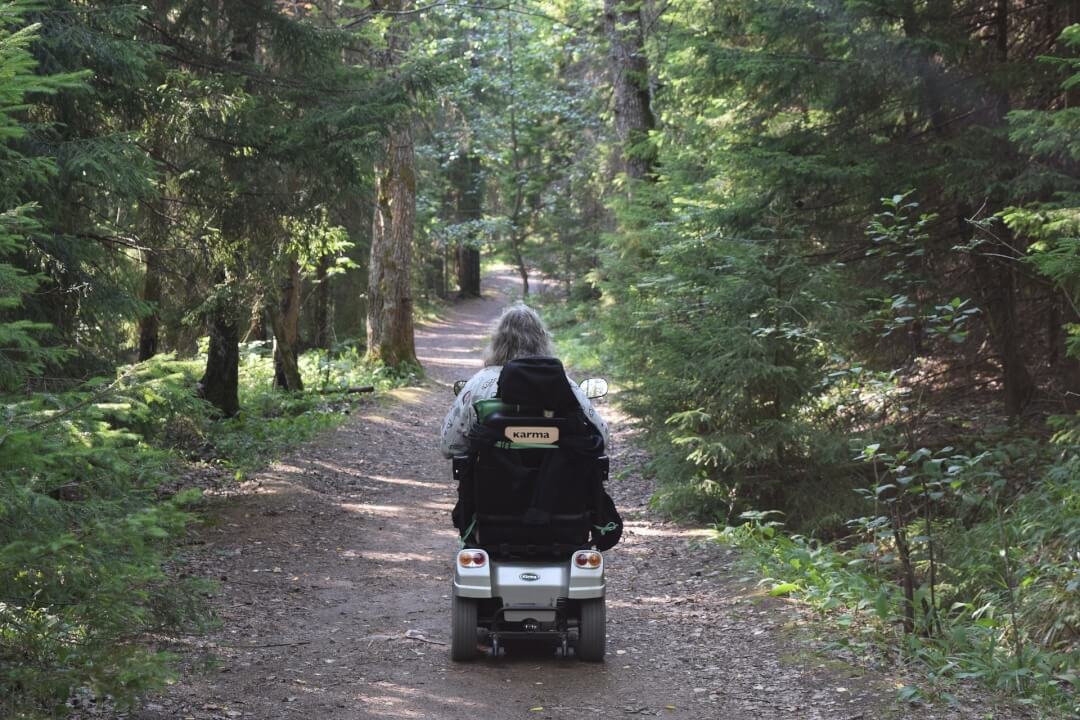

Mobility scooter safety isn’t just about protecting yourself – it’s about sharing the road responsibly with pedestrians and drivers. When you follow proven mobility scooter safety tips, you reduce the risk of accidents and ride with confidence. This guide covers 11 practical strategies, from choosing the right model to visibility to defensive riding, so you can get the most from your scooter while keeping everyone safe.
In This Article
1. Choose a Scooter That Fits Your Abilities
The first step in staying safe on a mobility scooter is choosing one that matches your actual capabilities. Before purchasing, consult with your doctor or occupational therapist. They can assess whether you have the skills and strength to operate a scooter safely.
Key abilities to discuss with your healthcare provider:
- Hand-eye coordination
- Upper body and grip strength
- Balance and stability
- Vision and depth perception
- Concentration and reaction time
Be honest about your current abilities during this conversation. If your doctor clears you to use a scooter, choose one that matches your capabilities, not the fanciest model on the showroom floor. The right fit is the foundation of safe mobility scooter operation.
2. Purchase a Quality, Reliable Model
Don’t rush your purchase. You’ll encounter many scooters at various price points, but not all are equally well-constructed or suitable for your needs.
What to prioritize:
- Build quality and durability (solid frame, reliable motor)
- Controls that feel intuitive to you (not cramped or oversensitive)
- Reviews from users with similar mobility profiles
- A dealer or manufacturer with strong customer support
- Compliance with local regulations (some areas have specific rules for scooters)
Following your doctor’s recommendations on features and capabilities ensures you invest in a reliable scooter. A quality model is an investment in your independence and long-term safety.
3. Train Yourself Before Riding in Public

Mobility scooter training is one of the most overlooked and most important safety steps. Before taking your scooter into public spaces, practice in low-risk environments:
- Empty parking lots
- Quiet residential streets or cul-de-sacs
- Parks or open green spaces
- Store aisles (ask permission from management first)
Practice these maneuvers specifically:
- Tight turns and pivot movements
- Backing up and reversing
- Stopping quickly in an emergency
- Navigating obstacles (curbs, ramps, narrow doorways, corners)
- Operating controls under different speeds
Proper mobility scooter training prevents collisions with pedestrians, storefronts, and other hazards. It also builds your confidence and muscle memory, making your eventual public rides safer, smoother, and more enjoyable for everyone around you.
4. Make Yourself Highly Visible
Your scooter’s color alone isn’t enough to keep you visible, especially in low light or adverse weather. Even a bright red or yellow scooter can disappear in evening shadows or heavy traffic.
Essential visibility upgrades for mobility scooter safety:
- Front lights: Two bright lights (white or amber) positioned at eye level
- Rear lights: Two bright red lights, visible from at least 500 feet away
- Reflective strips: Along the sides, back, and corners to catch vehicle headlights
- High-visibility flags or markers on the back (optional but highly recommended)
Evening and overcast conditions are the highest-risk times. Many collisions occur because drivers and pedestrians didn’t see the scooter in time. More lights and reflectors = more time for others to react and slow down. Visibility is a cornerstone of safe mobility scooter operation.
5. Know and Follow Local Rules

Mobility scooter regulations vary significantly by location. Some cities enforce strict speed limits; others have detailed restrictions on where scooters can travel. Ignoring these rules can lead to fines, liability, or accidents.
Find out the rules in your area:
- Maximum speed limits (often 5–10 mph in pedestrian zones)
- Where scooters are permitted (sidewalks vs. streets vs. both)
- Lighting and reflector requirements
- Age or operator certification requirements (rare, but possible)
- Alcohol/impairment laws (some states prohibit operating under the influence)
- Whether insurance or registration is required
Contact your local Department of Transportation, city council, or police department, or check their website for official scooter guidelines. Knowing and following these mobility scooter safety rules protects you legally and reduces the risk of conflict with law enforcement and other road users.
6. Keep Up with Regular Maintenance
A well-maintained scooter is a safe scooter. Regular maintenance catches small problems before they become serious hazards.
Basic maintenance schedule for mobility scooter safety:
- Monthly: Check tire pressure and tread condition, test all lights and reflectors, inspect the battery charge and terminals, check brake responsiveness
- Quarterly: Have a certified technician inspect brakes, steering responsiveness, frame alignment, and electrical connections
- Annually: Full professional service and comprehensive safety inspection
Build a relationship with a certified mobility technician in your area. They can spot wear, corrosion, or damage you might miss, ensuring your scooter stays in peak operating condition. A maintained scooter is less likely to fail you in a critical moment.
7. Always Wear a Helmet

Head injuries from mobility scooter collisions can be severe, life-altering, and even fatal. A helmet is one of the simplest and most effective pieces of safety equipment you can use.
Helmet guidelines for mobility scooter safety:
- Wear one every time you ride, even on short trips to nearby stores
- Choose a helmet certified by DOT (Department of Transportation) or CPSC (Consumer Product Safety Commission) standards
- Make sure it fits snugly, no more than two fingers’ width between your forehead and the helmet
- Fasten the chin strap securely every single time
- Replace it immediately if it’s been in any accident, even a minor one
Many riders resist helmets for comfort or appearance reasons. But the risk of serious head trauma, brain injury, skull fracture, and internal bleeding far outweighs these concerns. A helmet can be the difference between a minor accident and a life-changing injury.
8. Assess Your Own Readiness
Your ability to operate a scooter safely can change over time. Illness, surgery, medication changes, or natural aging can affect your strength, balance, reflexes, or concentration. Regular self-assessment is part of responsible mobility scooter safety.
When to check in with your doctor or therapist:
- After an injury, surgery, or hospitalization
- If you notice new tremors, weakness, or pain in your hands or legs
- If you’ve had a “close call” or collision (even minor)
- After any medication changes that affect alertness or coordination
- If you feel less confident or more anxious while riding
- Annually, as a preventive check-in
You may need temporary adjustments (slower speeds, shorter riding distances, extra training) or permanent modifications (different controls, a smaller or more stable model) to stay safe. Being honest about your limits and adjusting accordingly protects both you and others.
9. Don’t Assume Drivers See You
This is critical: Never assume another driver or pedestrian can see you. Drivers are distracted by texting, eating, searching for directions on their GPS, or lost in thought. Pedestrians are often staring at their phones. Cyclists are daydreaming. In this environment, visibility and defensive riding are your best defense.
What defensive mobility scooter operation looks like:
- Don’t assume a car at a stop sign will stop; make eye contact if possible and slow down
- Don’t cross in front of vehicles, even if you think they’ll stop, wait for them to move first
- Use lights and reflectors, but don’t rely on them alone to keep you safe
- Ride defensively; anticipate what others might do, not just what they should do
- Slow down dramatically near intersections, driveways, and parking lots where vehicles emerge
- Avoid riding immediately behind parked cars (drivers may not see you when pulling out)
- Keep your hands on the controls and stay alert, no distractions
Your best defense is visibility plus defensive riding. Treat every interaction with vehicles as if you’re invisible. This mindset, combined with your lights, reflectors, and training, creates a comprehensive safety system.
10. Prefer Sidewalks Over Streets
When safe and legal, ride on sidewalks rather than streets. Vehicles can travel at high speeds and may not react quickly to a scooter. A collision with a car moving at 35 mph is far more dangerous than an incident on a pedestrian sidewalk.
Sidewalk vs. street comparison:
| Factor | Sidewalk | Street |
|---|---|---|
| Typical vehicle speed | 0–5 mph (pedestrian pace) | 25–50+ mph |
| Reaction time available | Longer (seconds) | Shorter (fraction of a second) |
| Typical injury severity | Minor-to-moderate | Severe-to-fatal |
| Legal clarity | Often required for scooters | Often restricted or prohibited |
Use streets only when necessary (no sidewalk available, construction blocking the path, etc.). When you must use a street, follow all the rules listed in Section 5 and ride extra defensively. Always check local regulations about where scooters are legally permitted. Rules vary by city and state.
11. Cross Roads at Pedestrian Crossings
Don’t cross mid-block or in areas without marked pedestrian crossings. Drivers don’t expect traffic in those locations and won’t be looking for you.
Safe road crossing procedure for mobility scooter users:
- Wait for the pedestrian “walk” signal and look both ways (drivers run red lights)
- Make yourself visible to drivers, especially those turning right
- Cross slowly and deliberately – don’t rush
- Be aware of drivers turning right on red (many don’t check for pedestrians or scooters)
- Watch for vehicles pulling out of driveways or parking lots during your crossing
- Don’t assume a driver has seen you, even if you made eye contact
Crossing in designated pedestrian areas gives you legal protection, gives drivers the clearest signal that you’re crossing, and maximizes reaction time for everyone involved. It’s a simple rule that significantly reduces the risk of accidents.
Final Thoughts
A mobility scooter can restore independence and freedom, but only if you operate it safely. The 11 mobility scooter safety tips in this guide work together as a system: a quality scooter, proper training, high visibility, defensive riding, regular maintenance, and personal accountability create a comprehensive approach to safe mobility scooter operation.
Before your next ride, ask yourself:
- Is my scooter well-maintained and in good working condition?
- Am I visible to drivers and pedestrians (lights, reflectors, colors)?
- Do I know the local rules for scooter operation?
- Am I physically and mentally ready to ride today?
- Will I wear my helmet?
- Have I practiced the maneuvers I’ll encounter?
If you can answer “yes” to these questions, you’re ready to ride with confidence and to share the road and sidewalk safely with others.
Related Articles